 Osteopathic Medicine
Osteopathic Medicine

 Philosophy
Most medicine asks "what's wrong?" Functional medicine asks "why?" The difference determines whether you manage a condition for life or actually resolve it.
Here's a scenario that plays out thousands of times a day in American medicine: a patient comes in with chronic fatigue, brain fog, and joint pain. Labs come back within normal range. The doctor prescribes a sleep aid, an anti-inflammatory, and a referral to rheumatology. The patient leaves with three new prescriptions and no answers.
This isn't a failure of bad doctors — it's a predictable outcome of a system that incentivizes volume, penalizes complexity, and measures success by billing codes rather than patient outcomes. The system asks "what" — what's the diagnosis, what's the treatment — but rarely asks "why."
Root-cause medicine (often called functional medicine or integrative medicine) starts from a different assumption: that symptoms are signals, not the problem itself. Fatigue isn't a disease — it's a sign that something upstream is wrong. Pain isn't the enemy — it's the body's alarm system. The goal is to find what's triggering the alarm, not just silence it.
This approach requires asking more questions, ordering more thoughtful lab work, and spending more time with each patient. It requires knowing not just the patient's diagnosis, but their history, their environment, their diet, their stress levels, and what's been tried before. It's harder. It's slower. And it produces fundamentally different outcomes.
Consider chronic low back pain. A conventional approach might involve imaging, physical therapy referral, and NSAIDs. If the pain persists, perhaps an epidural steroid injection. These can all provide relief — but they don't address why the back is painful in the first place.
A root-cause approach asks: Is this a structural issue? A fascial restriction? A postural compensation from an old ankle injury? A systemic inflammatory process? A gut-driven inflammatory cascade? Each answer points to a different treatment — and a genuine path toward resolution rather than management.
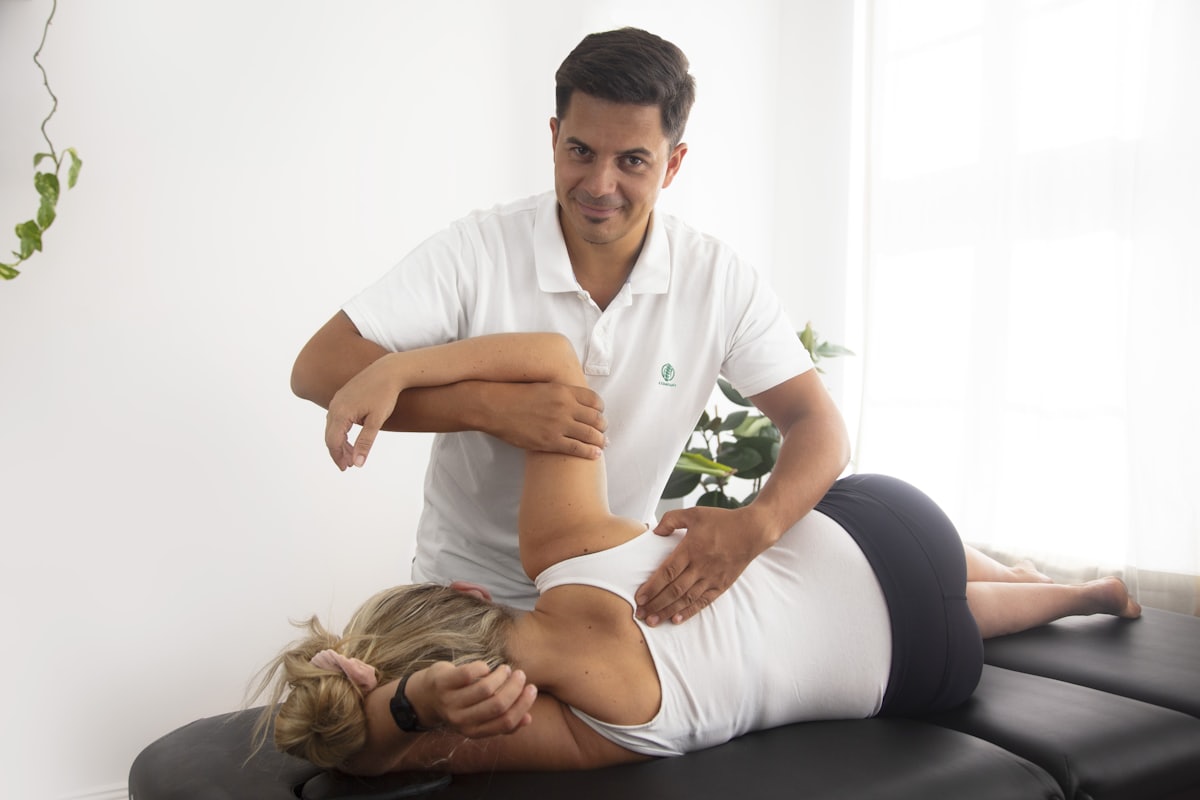
Osteopathic medicine is inherently root-cause-oriented. One of its founding principles is that structure and function are interrelated — that the physical organization of the body affects how it works, and vice versa. Dr. Burns trained at Kirksville College of Osteopathic Medicine, the birthplace of osteopathy, and carries that philosophy into every patient interaction.
The question isn't "what's the diagnosis?" The question is "why does this person have this condition, and what does their body need to get better?"
Root-cause medicine is most powerful for people dealing with chronic or complex conditions where the conventional approach has plateaued — fatigue, chronic pain, hormonal imbalance, autoimmune issues, recurrent infections, digestive problems. It's also valuable as a preventive framework for people who want to understand their health proactively, not reactively.
If you've been told "your labs are normal" but you know something is wrong, that's exactly the situation root-cause medicine is designed for. Reach out to learn more about how Dr. Burns approaches care.
Dr. Burns brings a functional, root-cause perspective to every appointment at Burns Family Wellness Care — looking for the source of your symptoms, not just a label for them.
Contact Us