 Osteopathic Medicine
Osteopathic Medicine

 Osteopathic Medicine
Fascia is the connective tissue that wraps and connects every structure in your body. Restrictions in this system can cause pain, limit movement, and affect organ function — often far from where you feel it.
If you've ever had pain in one part of your body after an injury somewhere entirely different — plantar fasciitis that seemed to start after a hip surgery, for example, or neck pain that developed after an ankle sprain — you've experienced the fascial system at work.
Fascia is one of the most important and least-understood structures in the human body. Understanding it changes how you think about pain, mobility, and whole-person health.
Fascia is a band or sheet of connective tissue — primarily collagen — that forms beneath the skin to attach, stabilize, enclose, and separate muscles and other internal organs. It wraps around and through every muscle, bone, nerve, blood vessel, and organ in the body in a continuous, three-dimensional web.
Think of it as a full-body suit of connective tissue. Every structure in your body is simultaneously distinct from and connected to every other structure — through fascia.
When fascia becomes restricted — through injury, inflammation, surgery, repetitive stress, or poor posture — it doesn't just affect the local area. Because the fascial network is continuous throughout the body, a restriction in one location can transmit tension and dysfunction to seemingly unrelated areas.
Standard medical imaging (X-rays, MRIs, CT scans) is excellent at visualizing bone, muscle tears, disc herniation, and masses. It is essentially blind to fascial restriction. Fascia appears as background structure on imaging — clinicians trained to look for structural pathology will often miss the fascial component entirely.
Assessment of fascial restriction is a hands-on skill that requires specialized training. Osteopathic physicians receive this training as part of their medical education. Dr. Burns has a particular clinical focus on the fascial system and uses it as a primary lens in her assessment of patients with complex or hard-to-explain symptoms.
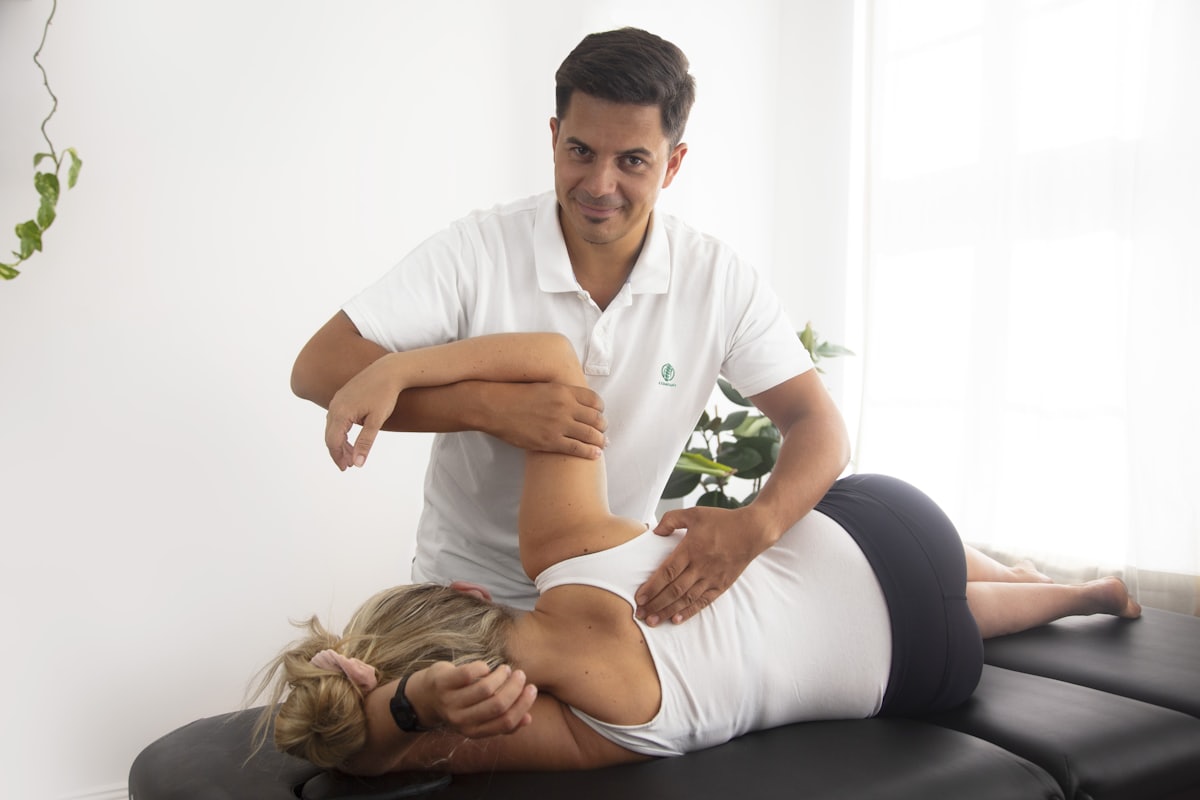
Osteopathic Manual Therapy includes several techniques specifically designed to address fascial restriction — myofascial release, balanced ligamentous tension, and facilitated positional release, among others. These techniques are typically gentle and indirect, working with the tissue rather than forcing it.
Fascia connects everything. Treating the body as a collection of separate parts will always miss what the fascial system is telling you.
Dr. Burns has specialized training in fascial assessment and treatment — a lens that often reveals the hidden source of chronic, hard-to-explain symptoms.
Contact Us